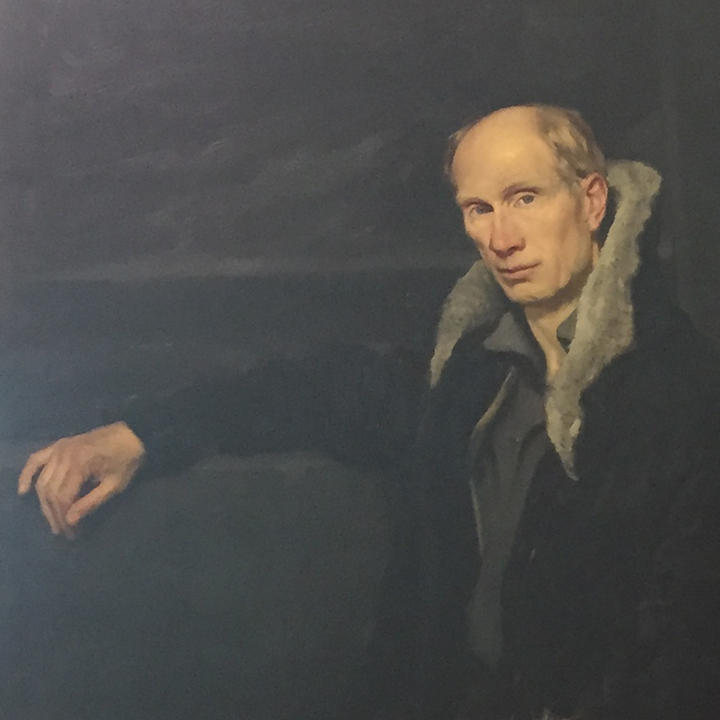
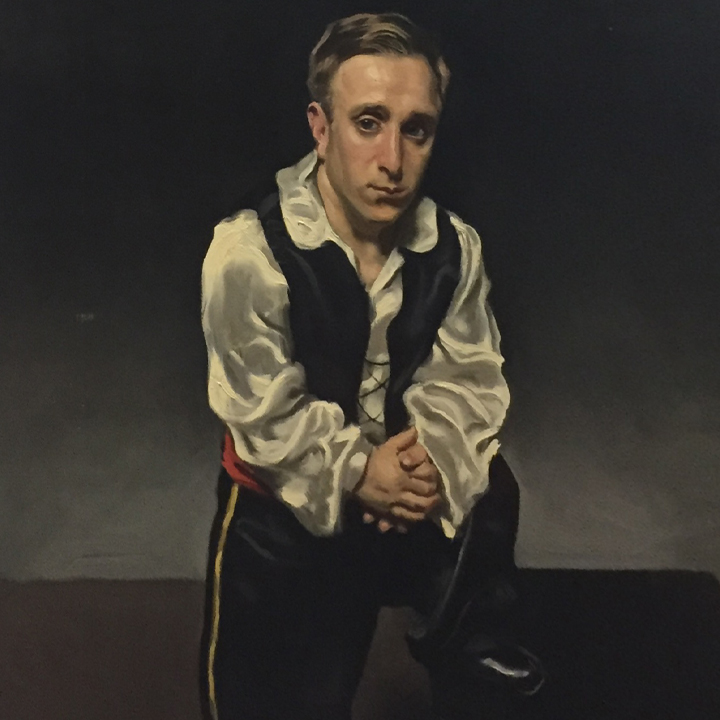
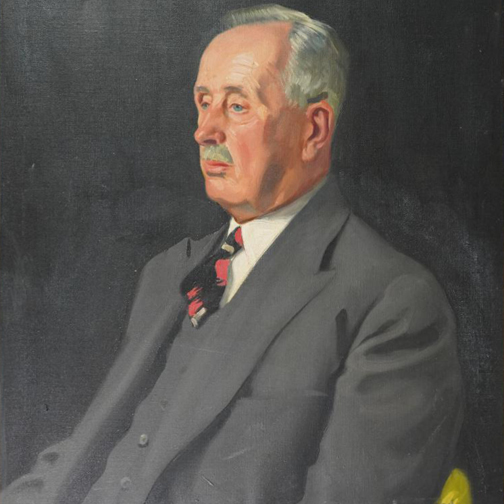
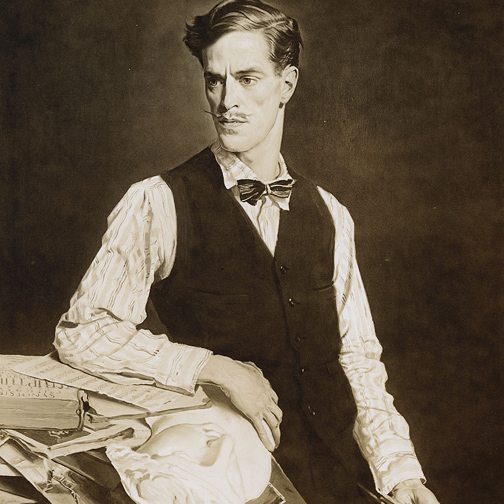
Sidney Edward Dickinson (1890–1980) was an American figure and portrait painter known for his expressive brushwork, alla prima technique, and a career that spanned over six decades. He was born on November 28, 1890, in Wallingford, Connecticut. Dickinson began formal art training at a young age, studying in the Academy and Art Department from 1905 to 1908. He attended Oberlin College in Ohio before continuing his education at the Art Students League in New York (1910–11), studying under William Merritt Chase and George Bridgman, and at the National Academy of Design (1910–12) under Douglas Volk.
He made his exhibition debut at the National Academy of Design in 1915. In 1917, he moved to Calhoun, Alabama, where his aunt, Charlotte Thorn, ran the Calhoun Colored School. From 1919 to 1920, Dickinson taught at the Art Students League and continued exhibiting regularly at the National Academy.
He also served on the Academy Council (1930–33) and taught at the Academy school (1928–31). He was elected a full Academician in 1927 and joined the American Academy of Arts and Letters in 1931. He received further recognition with the Isaac N. Maynard Prizes (1933, 1938) and the Benjamin Altman Prize (1936). Dickinson returned to the Art Students League in the 1940s and became a full-time faculty member from 1949 to 1973.
His portrait subjects included Charles ‘Red’ Barrett, Major League Baseball pitcher; Vannevar Bush, World War II scientific administrator; William Edward Dodd, U.S. Ambassador to Germany; Edward Henry O’Hare, Navy aviator and Medal of Honor recipient; Fiorello La Guardia, New York City mayor; Adolfo Best Maugard, Mexican painter and filmmaker; Ruth Rowland Nichols, aviation pioneer; and Helen Wills, tennis champion.
His artistic style emphasized spontaneity and vitality, often completing portraits in one sitting with thick, textured brushwork and vibrant backgrounds. While primarily a studio-based portraitist, Dickinson occasionally produced landscapes using plein air studies. His few landscapes, such as those of Montgomery, Alabama, were rendered in a sketch-like, impressionistic manner.
A member of the Allied Artists of America, Dickinson’s work is held in numerous public and private collections, including the National Gallery of Art, Smithsonian American Art Museum, New Britain Museum of American Art, Figge Art Museum, Greenville County Museum of Art, and Charleston Renaissance Gallery. He maintained a studio near Carnegie Hall for most of his career and retired to Windsor in the late 1970s.
This site is maintained by Sidney Dickinson’s great-grandson.


Awards
- Allied Artists of America
1930: Silver Medal
1937: Medal of Honor for Ross Moffett - Artists’ Fellowship, Inc.
1969: The Benjamin West Clinedinst Memorial Medal - Carnegie Institute
1948: The Carnegie Prize Honorary Mention for Pat Lytel, Tumbler - Corcoran Gallery
1924: Popular Prize for Nude - National Academy of Design
1917: 3rd Julius Hallgarten Prize for Unrest
1924: 1st Julius Hallgarten Prize for Amy S. Dickinson
1927: Unknown
1933: Isaac N. Maynard Portrait Prize for Florence Justineau
1936: Benjamin Altman Prize for The Pale Rider
1938: Isaac N. Maynard Portrait Prize for The Pretty Book
1942: Carnegie Prize for Charles Sumner Woolworth - National Arts Club
1932: 1st Prize - Pennsylvania Academy
1923: Philadelphia Prize for The Print
1924: Carol H. Beck Gold Medal for Edwin Dickinson
1931: Walter Lippincott Prize for Mary
 Sidney Dickinson